 A butterfly garden can be as simple as a massed planting of butterfly-favorite plants in a sunny corner of your yard, or as large as a specially planted area of a state park.
Butterfly Garden Characteristics
• Sunny location
Butterflies depend on the sun to warm their body temperature to the 85°-100° F range needed for flying. Scientists have even observed that butterflies position themselves during the night so that the early morning sun touches their wings to warm them.
• Moisture
If you’ve ever wondered why butterflies congregate at the edge of a mudpuddle, it’s because they can’t drink directly from open water. You can recreate a similar setting by sinking a container of wet sand in the ground. Add rocks or sticks for the perches.
• Rocks
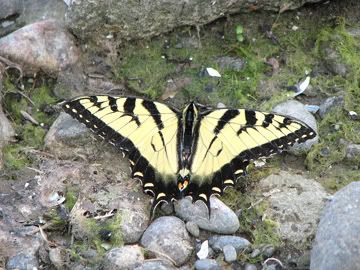
On cloudy or cool days large rocks provide a basking spot to help warm butterflies for flight.
• Nectar plants and host plants
Although the Roman naturalist Pliny the Elder thought caterpillars came from the morning dew that formed on tree leaves, we know that specific butterflies come from specific caterpillars.
Both the butterflies and the caterpillars need specific plants or flowers to satisfy their energy needs. Of course, the more varieties you can plant, the greater your chances for attracting more butterflies. Remember too, that planting in clumps — not rows — increases the likelihood of butterflies finding and choosing your garden for a feeding stop. The proper host plant for caterpillar feeding must be included to ultimately have the desired butterfly species.
• Shelter
Trees, shrubs, fences, and buildings can provide protection from prevailing winds. A leafy cover offers a hiding place from hungry birds.
• Untidiness
If you want to attract butterflies, it helps to be tolerant because butterflies prefer a “natural” look rather than a “tidy” garden. That means allowing some “weed” species, such as stinging nettle and thistle, to grow in the landscape. It also means avoiding pesticides. Insecticides are the most dangerous, but herbicides also can destroy needed nectar or host plants.
• Overwintering spots
We don’t see butterflies when the temperatures drop, but some of them do spend their winters in tree crevices, under bark, in log piles, or in building nooks. Hibernation boxes also are available. A log pile can serve as an over-wintering hotel for butterflies. The logs are criss-crossed to provide as many open spaces within the pile as possible. The ideal pile uses logs 3 to 6 feet long, stacked 3 to 5 feet high, and protected at the top by canvas or another covering. It should be placed in a sheltered location near nectar flowers or shrubs and host plants.
Favorite Nectar Plants
(Perennials)
Aster (Aster spp.)
Bee balm (Monarda didyma)
Black-eyed Susan or gloriosa daisy (Rudbeckia spp.)
Blazing star or gay-feather (Liatris scariosa)
Butterfly bush (Buddleia spp.)
Butterfly weed (Asclepias tuberosa)
Catmint (Nepeta x faassenii)
Chives (Allium schoenoprasum)
Coreopsis, lanceleaf (Coreopsis lanceolata)
Coreopsis, thread-leaf (Coreopsis verticillata )
Daylily (Hemerocallis spp.)
False indigo (Baptisia australis)
Fernleaf yarrow (Achillea filipendulina)
Gas plant (Dictamnus albus or D. fraxinella)
Globe thistle (Echinops ritro)
Goldenrod (Solidago hybrids)
Hollyhock (Alcea rosea), single varieties
Hyssop (Hyssopus officinalis)
Joe-pye weed (Eupatorium purpureum)
Lavender (Lavandula angustifolia ‘Hidcote Strain’)
Lilac, common or French hybrid (Syringa vulgaris)
Pearly everlasting (Anaphalis margaritacea)
Phlox (Phlox paniculata, Phlox maculata)
Purple coneflower (Echinacea purpurea)
Showy stonecrop sedum (Sedum spectabile
‘Autumn Joy’)
Snakeroot (Cimicifuga racemosa)
Sunflower heliopsis (Heliopsis helianthoides)
(Annuals)
Borage (Borago officinalis)
Cosmos ‘Sensation’ (Cosmos bipinnatus)
Dill (Anethum graveolens)
Globe amaranth (Gomphrena globosa)
Heliotrope (Heliotropium arborescens)
Lantana (Lantana camara)
Marigold (Tagetes spp.)
Mexican sunflower (Tithonia rotundifolia)
Nasturtium (Tropaeolum majus), especially
yellow varieties
Parsley (Petroselinum crispum) any variety
Pentas (Pentas lanceolata)
Stock (Matthiola incana ‘Annua’ hybrids)
Sweet alyssum (Lobularia maritima), especially
purple
Zinnia (Zinnia elegans)
Favorite Host Plants
Alyssum ,Nasturtium
Aster, Parsley
Borage ,Ragweed
Carrot ,Stinging nettle
Cherry, Thistle
Crabgrass ,Violets
Hollyhock ,White clover
Marigold, Wisteria
Aster (Aster spp.)
Bee balm (Monarda didyma)
Black-eyed Susan or gloriosa daisy (Rudbeckia spp.)
Blazing star or gay-feather (Liatris scariosa)
Butterfly bush (Buddleia spp.)
Butterfly weed (Asclepias tuberosa)
Catmint (Nepeta x faassenii)
Chives (Allium schoenoprasum)
Coreopsis, lanceleaf (Coreopsis lanceolata)
Coreopsis, thread-leaf (Coreopsis verticillata )
Daylily (Hemerocallis spp.)
False indigo (Baptisia australis)
Fernleaf yarrow (Achillea filipendulina)
Gas plant (Dictamnus albus or D. fraxinella)
Globe thistle (Echinops ritro)
Goldenrod (Solidago hybrids)
Hollyhock (Alcea rosea), single varieties
Hyssop (Hyssopus officinalis)
Joe-pye weed (Eupatorium purpureum)
Lavender (Lavandula angustifolia ‘Hidcote Strain’)
Lilac, common or French hybrid (Syringa vulgaris)
Pearly everlasting (Anaphalis margaritacea)
Phlox (Phlox paniculata, Phlox maculata)
Purple coneflower (Echinacea purpurea)
Showy stonecrop sedum (Sedum spectabile
‘Autumn Joy’)
Snakeroot (Cimicifuga racemosa)
Sunflower heliopsis (Heliopsis helianthoides)
(Annuals)
Borage (Borago officinalis)
Cosmos ‘Sensation’ (Cosmos bipinnatus)
Dill (Anethum graveolens)
Globe amaranth (Gomphrena globosa)
Heliotrope (Heliotropium arborescens)
Lantana (Lantana camara)
Marigold (Tagetes spp.)
Mexican sunflower (Tithonia rotundifolia)
Nasturtium (Tropaeolum majus), especially
yellow varieties
Parsley (Petroselinum crispum) any variety
Pentas (Pentas lanceolata)
Stock (Matthiola incana ‘Annua’ hybrids)
Sweet alyssum (Lobularia maritima), especially
purple
Zinnia (Zinnia elegans)
Favorite Host Plants
Alyssum ,Nasturtium
Aster, Parsley
Borage ,Ragweed
Carrot ,Stinging nettle
Cherry, Thistle
Crabgrass ,Violets
Hollyhock ,White clover
Marigold, Wisteria
Authors: Richard Jauron, Linda Naeve & Linda Naeve
